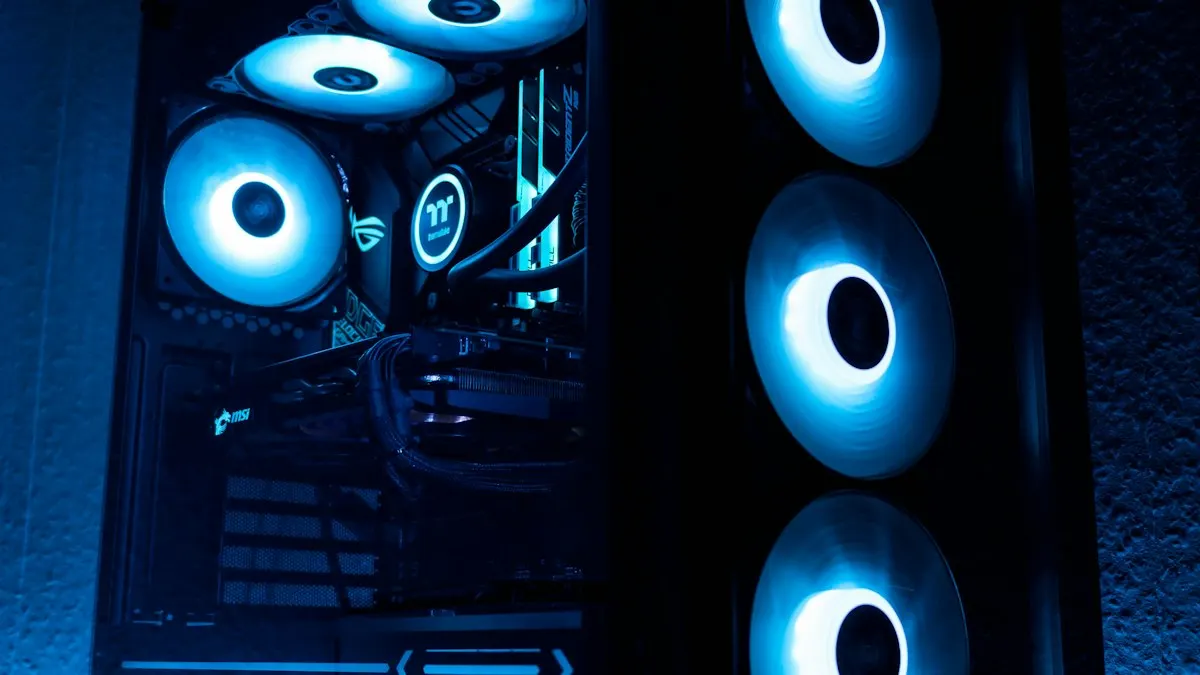
The introduction of initial GFX13 support across the AMDGPU kernel module and Mesa user-space drivers marks a foundational shift in how AMD prepares its graphics and compute stacks for upcoming hardware generations. By concurrently submitting patches for the kernel-space AMDGPU driver and the user-space Mesa components—specifically the RADV Vulkan driver and the RadeonSI Gallium3D OpenGL driver—AMD is establishing a comprehensive pipeline for low-level hardware enablement. This vertical integration ensures that compiler backends, memory management units, and command submission rings are fully synchronized well ahead of silicon commercialization, preventing the fragmentation issues that historically plagued early open-source hardware bring-up.
At the core of this engineering effort is the evolution of AMD’s microarchitectural target, widely associated with the RDNA5 generation and its corresponding GFX13 ISA (Instruction Set Architecture). The GFX13 designation implies substantial modifications to the wavefront execution model, register allocation limits, and cache hierarchy management compared to its GFX11 (RDNA3) and GFX12 predecessors. Bringing up these features within Mesa requires updating the LLVM/compiler backend infrastructure to emit valid bytecode, adjusting the memory allocation strategies in the kernel-space DRM (Direct Rendering Manager), and implementing new hardware capability queries within the Vulkan and OpenGL runtimes. Systems engineers and driver developers must navigate these low-level modifications to ensure that command buffers generated by user-space applications translate cleanly into hardware instructions executed by the GPU compute units without triggering illegal instruction faults or page faults in the IOMMU.
Architectural & Low-Level Mechanics
The integration of GFX13 within the Mesa ecosystem hinges on updating the driver’s interaction with the kernel via the AMDGPU DRM interface. When a user-space application initializes a context using RADV or RadeonSI, the driver queries the kernel for the specific GPU generation and its associated feature flags using the AMDGPU_INFO_HW_IP and AMDGPU_INFO_DEV_INFO ioctl calls. With GFX13, these ioctl responses expose new hardware capabilities, such as revised workgroup sizing limits, altered wavefront dispatch topologies, and updated memory cache flushing primitives. The user-space driver must then configure its internal command stream generation to align with the new microarchitectural constraints, managing barriers, cache invalidations, and asynchronous compute queues accordingly.
To inspect and verify how the kernel and Mesa interact with new GFX IP levels during a bring-up phase, engineers typically rely on diagnostic kernel command-line parameters and debugging utilities. For instance, forcing specific driver configurations or capturing debug logs during the initialization of the AMDGPU module requires interacting with debugfs and kernel module options.
# Enable verbose debugging for the amdgpu kernel module during initialization
sudo modprobe -r amdgpu
sudo modprobe amdgpu dyndbg=\"+p\" amdgpu.vm_debug=1 amdgpu.sched_jobs=1

# Query the kernel for the detected GFX IP version using standard drm/amdgpu sysfs nodes
cat /sys/class/drm/card0/device/hw_ip_info/*/type

# Compile Mesa with developer flags targeting local GFX13 driver validation
meson setup build -Dbuildtype=debugoptimized -Dgallium-drivers=radeonsi -Dvulkan-drivers=amd -Dllvm=enabled
ninja -C build install
This configuration forces synchronous job scheduling and enables strict virtual memory debugging within the AMDGPU driver. These steps are critical when testing untested instruction sets or memory layouts introduced by GFX13, as they allow developers to isolate page faults and illegal memory accesses immediately upon command submission.
Comparative Architecture & Benchmark Matrix
Evaluating the GFX13 architecture against its predecessors reveals a deliberate shift toward higher instruction throughput, tighter memory coherence models, and enhanced asynchronous compute capabilities. The table below outlines the architectural contrasts across critical low-level metrics.
| Technical Dimension | GFX11 (RDNA3) | GFX12 (Iterative) | GFX13 (RDNA5 / Target) | Architectural Impact |
|---|---|---|---|---|
| Instruction Issue Rate | Dual-issue per WGP | Optimized dual-issue | Advanced wide-issue pipeline | Higher IPC for complex shaders and ray tracing intersect kernels. |
| Cache Hierarchy Latency | L1/L2 standard split | Refined L1 bandwidth | Low-latency L0/L1 interconnect | Reduced stall cycles during high-occupancy memory read operations. |
| Driver State Overhead | Moderate DRM ioctl overhead | Incremental optimizations | Streamlined command submission | Lower CPU overhead per draw call via optimized RADV ring mapping. |
| Wavefront Execution Model | 32/64 thread wavefronts | Flexible wave sizing | Enhanced SIMD32 scheduling | Better utilization for divergent branch workloads and AI inference. |
Engineering Trade-Offs & Operational Impact
Introducing a new hardware architecture into an active, upstream open-source driver stack introduces several notable engineering trade-offs that impact maintainers, systems integrators, and downstream enterprise users.
- Latency vs. Throughput: Early GFX13 compiler passes often prioritize correctness over aggressive instruction scheduling, which can temporarily elevate command submission latency until backend peephole optimizations mature.
- Memory Overhead: Expanded register file allocations and updated cache flushing sequences can increase the memory footprint of individual GPU contexts, requiring careful tuning of the DRM memory manager.
- Security vs. Performance: Enhanced hardware virtualization and isolation primitives in GFX13 add minor validation overhead during context switching, trading fractional raw throughput for robust multi-tenant container security.
- Developer Friction: Upstream developers must maintain backwards compatibility with GFX10 through GFX12 while simultaneously refactoring core common code paths to accommodate GFX13-specific hardware quirks.
Strategic Radar & Deployment Takeaways
For engineering teams managing high-performance computing clusters, cloud gaming infrastructure, or local AI model deployment pipelines, the appearance of GFX13 patches in Mesa and the Linux kernel signifies that hardware validation is entering its public software phase. While these initial merge requests are not yet production-ready for general consumer workloads, they provide an invaluable staging window for infrastructure architects to audit their CI/CD pipelines.
Workload suitability for early GFX13 stacks should remain strictly confined to staging environments, specialized hardware verification rigs, and internal compiler testing clusters. Production deployments relying on stable enterprise Linux distributions should defer adoption until the GFX13 Mesa components and kernel patches are backported into enterprise-supported LTS kernels and stable Mesa point releases. Moving forward, systems architects should monitor the upstream Mesa repository for the maturation of LLVM backend passes and the stabilization of the RADV submission path to ensure seamless integration when commercial hardware hits the market.